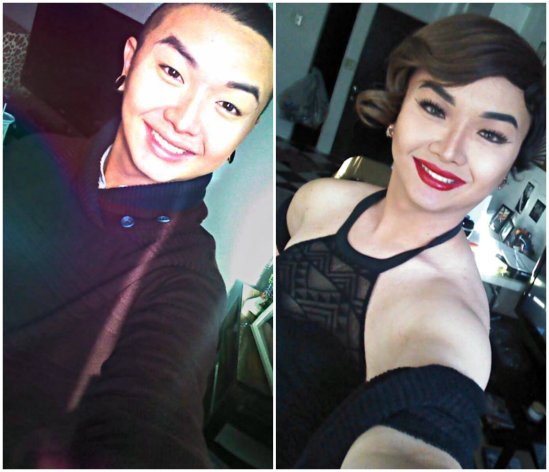
My secret dwelled deep. I asked myself if I could live in my secret forever. I am a Hmong gay man and a Hmong Drag Queen. I am my father’s gay son and my mother’s drag daughter. I am both a man and a woman and at the same time neither a man or a woman. I do know that I am Hmong, no matter if I identify as a man, woman, or neither. My gay identity made me “less” of a man, according to my family and my culture.
As the oldest son of four children, I was told that Hmong men are expected to grow up, attend college, get a career as a doctor, marry a wife, and raise a family. I was expected to carry on the family name and become a role model to the rest of the younger generations. I have lost count to how many times my father and uncle told me to “man up.” I was expected to be the leader of my household and one day have beautiful kids to carry on my family name.
At age 18, however, these expectations became a great failure to my parents. On graduation, I revealed my biggest secret to my parents that I am gay. I was known as the “lady boy” of my community. Gay to my parents, and perhaps to many Hmong parents as well, meant that I was transgender, confused, a prostitute, and it meant a loss of hope. To them, being gay meant that I want to be the other “gender.” The only definition of what my parents know to be gay was what they heard and a few times seen growing up as kids in the country side of Thailand. To them, I defied the Hmong culture. I went against every hetero-normative belief and I went against the only life they ever knew, the life of Hmong. To them and to everyone else before them, I was known as the sick and a sexual “lady boy”; someone who they falsely think is cursed and preyed on young boys, capable of converting people to my “lifestyle.” On coming out as gay, Hmong people think I will never have a family, a career, marriage, and life. This my parents feared.
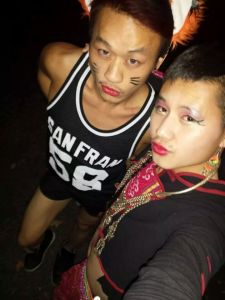
Before coming out, I never knew how much my Hmong identity and my gay identity would conflict. All of a sudden my sexual identity became the only identity Hmong people saw me as. I faced great hatred and prejudice from my own culture. I faced racism from non-Hmong people and discrimination and prejudice from my own people, my own family, and the rest of the community. I present myself as a Hmong man, not a gay person. When I put on heels, makeup, and perhaps a dress to imitate the art of drag, I become my mother’s daughter, my brother’s sister, and another Hmong person to challenge the authorities of what “men” and “women” ought to do and not ought to do.
At age 19, I became one of the few Hmong Drag Queens in America. I can literally count on two hands how many Hmong Drag Queens there are in this country. I go to school events in drag, I volunteer in drag, I speak to groups in drag, and I am in drag when I do classroom and university workshops and discussion. I started my life as a Drag Queen not because I identify as transgender but because I identify as myself.
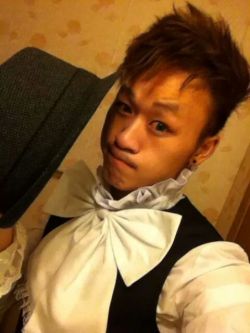
The first time I started drag was the first time I felt so free and so liberated. As a kid I knew I was gay. As a kid growing up in a house with girls, I was always fascinated with how my sister did her hair and how she wore pretty long dresses in the summer time. I always loved how my mom had flowers in her curly hair and the way her eyelashes were bridge long. I started drag as a way of entertainment. Soon enough it became a stress reliever. The way I transformed myself into a different character leaves behind the challenges I faced as a Hmong gay man. It delivered me from the stressful daily tasks and stresses I remember from school and work. However, it was not long before I wanted to be more than entertainment. Being a drag queen meant, to me, being my mother’s daughter. I suddenly became the daughter my mother never had and for a moment in my life it felt acceptable. It felt acceptable to be in drag and to “feminine” household chores. When I put on that wig and transformed myself into an Asian lotus flower, the gay son she so felt bad for was gone.
My identity means more to me than some funky drag show with a few dollars to tip for the night. My identity as a drag daughter is a political symbol, it is a way of self expression and a way for me to bend the gender binary that so unfortunately still exist in both my Hmong and American identity. The art of drag is to imitate the gender norms of the other “gender.”
When I come across other Hmong people I get treated differently. Hmong men do not want to talk to me in fear of association of being gay and Hmong women only talk to me because of my “gay” or “drag” status. I become a sick fantasy for some women to have a need for a “gay” best friend. You see, to my friends I am their “gay friend.” To my cousins I am their “gay and overly feminine” cousin. To my community I am an embarrassment. I come to embrace all parts of my identity and no longer have time for shame or embarrassment. So I like to wear a dress. Some say I enforce the social construction of gender expectation in the Hmong culture. Some say I fight against it. I say, I fight for me.
I am my father’s son and my mother’s daughter. I am just his gay son and I am just her drag daughter. To my parents, I am just their child. No labels, no hatred, no prejudice, just simply their kid.
Tou Fong Lee is currently a Junior at the University of Wisconsin Milwaukee pursuing a double degree in Psychology and Religious Studies with an interdisciplinary in Hmong Studies. Tou’s primary emphasis is in clinical depression and how external and internal factors influence the way we perceive ourselves and the world. He uses pronouns he//him/his and uses pronouns she/her/hers when he is in his drag form. Tou serves as the Executive Assistant and Pride Discovery Camp Coordinator for the UWM LGBT Resource Center and is participating in a research team. Tou created his university’s first Hmong Safe Space Training Program and is currently working on a project to create a Hmong Queer Campaign to raise awareness to target the Hmong queer stigma. He plans to graduate from his undergraduate studies and pursue his graduate and doctoral work. You can contact Tou Fong Lee on Facebook.
Celebrate June PRIDE Month by contributing your narrative to be part of AAPI LGBTQ PRIDE Narrative Series. If you identify as AAPI LGBTQ and want to contribute your narrative or have questions, please email Linda for more information – linda@mwsmovement.com


 Susan Kikuchi works as a labor organizer and currently lives in Minneapolis. She is constantly having the same conversations over and over with herself, using new vocabulary each time.








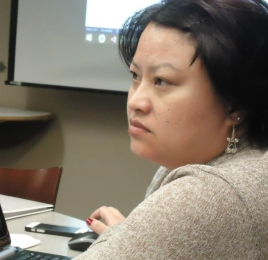 In 2014, I was asked to be the keynote speaker to open for a conference led by and for Hmong youth. The theme was “Beyond the Horizon.” As I thought about what I would say to them to inspire them that day and going forward, I had to bring myself back to their age, when I was a teenager twenty years ago. I was a Hmong daughter. My dad was a shaman, bounded to tradition. My mom was the good Hmong wife, nurturing and devoted. I had two older brothers and a younger, American-born brother. I lived in Frogtown among friends and enemies; friends encouraged me to explore who I wanted to be and enemies told me who I would become. I was a Hmong girl trapped in an American woman’s body.
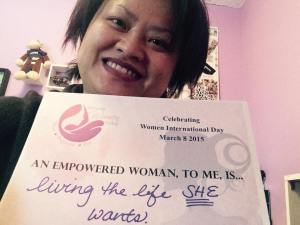 Shortly after this speech, my marriage of 18 years came to an end. He left and I wouldn’t let him back when he had no where else to go. At the family mediation meeting, where I was the only woman allowed to speak, eight men surrounded me, in addition to my soon-to-be ex-husband. For three hours, they told us how we could fix the “minor” problems in our marriage and stay together. They minimized my experiences and perspectives and defended his behavior. Finally, with my brothers by my side, figuratively and literally, I spoke up loud and clear. I reiterated my decision and did not permit them to attack it because they don’t walk in my shoes and they don’t carry my burdens. I have gotten to where I am by on my own merits and drive and I don’t owe anyone anything. So if they expect me to do as they say, they can expect to never see me again as I have no room in my life to be treated with disrespect and disregard. I had nothing to lose and everything to gain. They did not respond directly and ended the mediation.
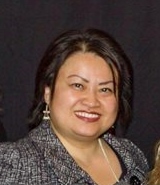 Kabo Yang is an independent consultant and doctoral candidate. She is the principal consultant of Legend Consulting Services, a firm she founded to provide management and leadership consulting to nonprofit organizations. Kabo is an active community member and currently serves on four nonprofit Boards and three committees. She received her Bachelor’s Degree in Business Administration from Metropolitan State University, her Master’s Degree in Organizational Leadership from St. Catherine University and is a doctoral candidate in the PhD in Human and Organizational Systems program at Fielding Graduate University. Her community and research interests are women, migration and integration. Kabo’s dissertation topic will be on the social capital of refugee women. You can connect and follow Kabo on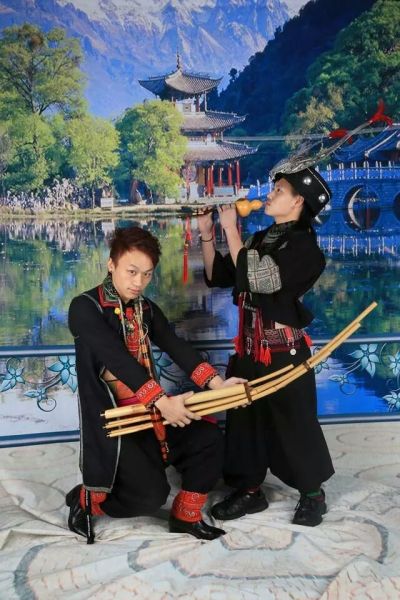


 MidWest Solidarity Movement