
Film Screening: Hafu: the mixed race experience in Japan. Source: hafufilm.com/en
Growing up fourth generation, developing an identity as an Asian American has felt like something of a choice, or a process. Perhaps it was inevitable but it feels like a reaction. I think that for some folks in immigrant communities who are first or second generation, ethnic identity can involve a strong cultural experience. Not a monolithic or a static one, to be sure, but perhaps a more cohesive one. My identity is of being an American, but a racialized American. Which is also a cultural experience, just an American one. I’m mixed, with a Japanese American father and a European American mother. My grandfather’s family were Buddhist missionaries who migrated to Hawai’i and helped found a temple there. I grew up in suburban Illinois without much of a community that looked like me or came from similar history. Coming from a family that was more or less assimilated, sometimes I think I grew to identify as a Japanese or Asian American based on the negative aspects of being a racialized person, rather than the positive aspects of identity, culture, or community. My choice to identify as such was and is a reaction to the self doubt, in/visibility, and microaggression that people of non-European descent experience in America. Ultimately I see this as a blessing because of the community and history I am still discovering, but also because it provided me with the earliest seeds of doubt about a racial system that I could not name but was keenly aware of.
I write from the “we” that is erased by assimilation.
I am decided by the fact
That our people came here to work in the sugar cane fields
That we came here to minister to those who worked in those fields
That we came here to get rich quick
That we died trying;
That we succeeded and forgot our mother tongues,
That we burned photographs and letters,
That our children would look at us as the enemy;
That we came here to live in segregated neighborhoods,
and that we did business in further segregated neighborhoods
That we came here to move to the suburbs
That each generation was foreign to the one that preceded it;
That our children would resent us for not teaching them who they were;
That we defined ourself against whiteness, while we craved whiteness,
while being used as a wedge against blackness,
That as we lost the our mother culture, we became something else entirely,
That we we were forced, coerced, encouraged, and then rewarded for assimilation;
That we came to sit in furious silence, or to laugh in self-hate,
when our American friends mocked our parents,
That we were still not American even after four generations,
That as mixed kids, we were Asian when you wanted to laugh,
but white when we challenged your racism, no matter where it was directed
That when we grew up, we died a little bit everytime we passed,
That when we grew up, we realized:
We would not be followed in the grocery store, but
our fathers would be followed home from the train station by boys calling them chink;
That our mixedness would be celebrated–
That they would offer our own bodies back to us as currency,
That this currency would only be of value when positioned against a backdrop of white power,
That the outsiders who celebrate our mixedness do so at the expense of our browner cousins;
That whiteness wants to extract the part of us that is not itself, both to taste it and to extinguish it;

Source: eclecticshaman.com
That we are not the sum of our parts, that we are neither of our parts;
That those who want to consume us, and sometimes do-
Spit us out as not their own,
Swallowed us and owned us, unaware we are
Both/and neither
That the nature of life is dualistic, not binaristic–
That the roots of the family tree divide infinitely in half
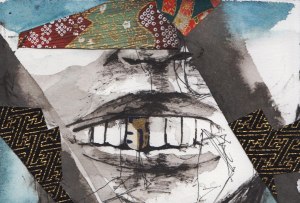 Susan Kikuchi works as a labor organizer and currently lives in Minneapolis. She is constantly having the same conversations over and over with herself, using new vocabulary each time.
Celebrate May Asian American and Pacific Islander Heritage Month by contributing your narrative to be part of AAPI Midwest Narrative Series. If you identify as AAPI in the Midwest and want to contribute your narrative or have questions, please email Linda for more information – linda@mwsmovement.com


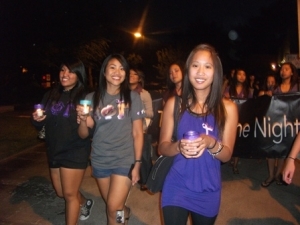
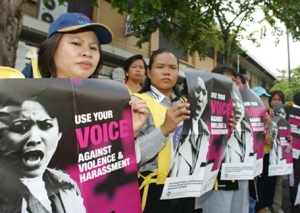
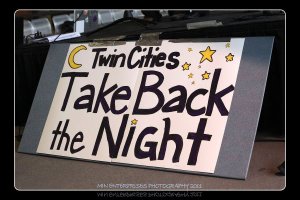

 I wanted to talk about my Tibetan-American identity at a time of increasing self-immolations inside Tibet and increasing racial tensions inside the US. In places like Ferguson and Baltimore, peaceful protests have been glossed over by the media in favor of scenes depicting graphic violence, no doubt for fleeting ratings boost. When I see such images, I can’t help but be reminded of the distorting of the peaceful protests in Tibet during the summer of the 2008 Beijing Olympics. The state media portrayed Tibetans as violent “thugs” targeting the dominant ethnic group, Han Chinese, in a so-called “autonomous region” that once was an independent Tibetan state.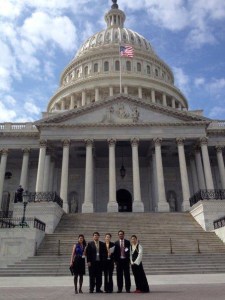
 Tenzin Pelkyi is currently a J.D. Candidate at the University of Minnesota, where she received her B.A. in Political Science and Global Studies. While in law school, she worked as a law clerk at Asian Americans Advancing Justice-AAJC and the U.S. Senate Judiciary Committee for Senator Amy Klobuchar in Washington, D.C. She also worked as a research assistant at the law school’s Energy Transition Lab and as a law intern for the Executive Office for Immigration Review at the U.S. Department of Justice. In addition to serving as president of her Law School Democrats chapter and as a member of the law school’s Diversity Week committee, Pelkyi has received widespread recognition for her advocacy, including from her university, several bar associations, and the Dalai Lama Trust.



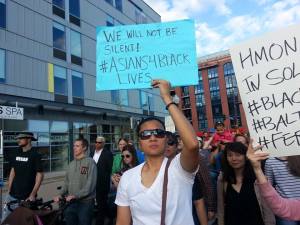






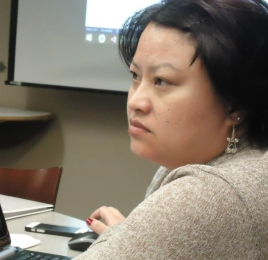 In 2014, I was asked to be the keynote speaker to open for a conference led by and for Hmong youth. The theme was “Beyond the Horizon.” As I thought about what I would say to them to inspire them that day and going forward, I had to bring myself back to their age, when I was a teenager twenty years ago. I was a Hmong daughter. My dad was a shaman, bounded to tradition. My mom was the good Hmong wife, nurturing and devoted. I had two older brothers and a younger, American-born brother. I lived in Frogtown among friends and enemies; friends encouraged me to explore who I wanted to be and enemies told me who I would become. I was a Hmong girl trapped in an American woman’s body.
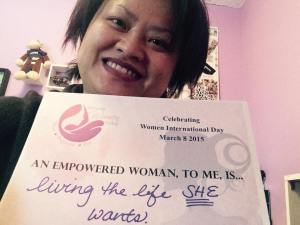 Shortly after this speech, my marriage of 18 years came to an end. He left and I wouldn’t let him back when he had no where else to go. At the family mediation meeting, where I was the only woman allowed to speak, eight men surrounded me, in addition to my soon-to-be ex-husband. For three hours, they told us how we could fix the “minor” problems in our marriage and stay together. They minimized my experiences and perspectives and defended his behavior. Finally, with my brothers by my side, figuratively and literally, I spoke up loud and clear. I reiterated my decision and did not permit them to attack it because they don’t walk in my shoes and they don’t carry my burdens. I have gotten to where I am by on my own merits and drive and I don’t owe anyone anything. So if they expect me to do as they say, they can expect to never see me again as I have no room in my life to be treated with disrespect and disregard. I had nothing to lose and everything to gain. They did not respond directly and ended the mediation.
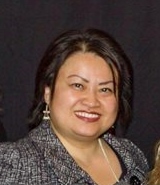 Kabo Yang is an independent consultant and doctoral candidate. She is the principal consultant of Legend Consulting Services, a firm she founded to provide management and leadership consulting to nonprofit organizations. Kabo is an active community member and currently serves on four nonprofit Boards and three committees. She received her Bachelor’s Degree in Business Administration from Metropolitan State University, her Master’s Degree in Organizational Leadership from St. Catherine University and is a doctoral candidate in the PhD in Human and Organizational Systems program at Fielding Graduate University. Her community and research interests are women, migration and integration. Kabo’s dissertation topic will be on the social capital of refugee women. You can connect and follow Kabo on





 MidWest Solidarity Movement