Raising UP Xiong’s Out of the Box Narrative!

Story #8

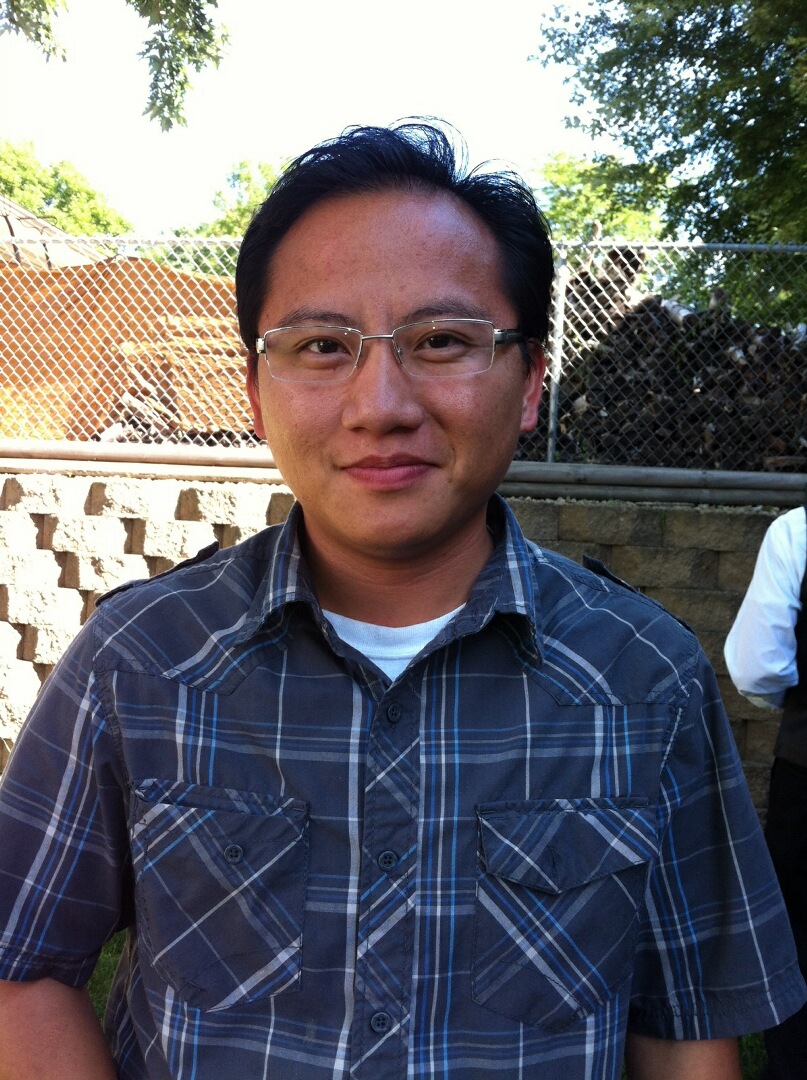
Xiong Yang is a 27 year-old shamanist, transman from Minnesota.

I was in kindergarten when I had my first crush. I think I started school a few days after it had already begun. I really liked a girl who had befriended me on the first day of class. I remember thinking to myself that it wasn’t normal. I knew I had to hide my feelings. In grade school, I used to write on the bathroom mirror that “I loved” so-and-so. One time, my brother saw it, because I forgot to erase it, and I freaked out and denied it. Another time in 4th grade, my best friend at the time, confronted me (in a friendly but frank way), are you a lesbian? Of course, I denied it. I had no connections to that term. And when I came out to one of my male friends in 6th grade, that I had a crush on the same girl he had a crush on (I was a tomboy at the time), I could tell he was uncomfortable with it. He kind of laughed it off. I transitioned when I was 13, at the end of 8th grade. In the summer before 8th grade, my mom finally allowed me to chop off my long, wavy hair. It was during the year of 8th grade that I became friends with my current partner. We started dating at the end of 8th grade. We just celebrated our 13th anniversary this summer.
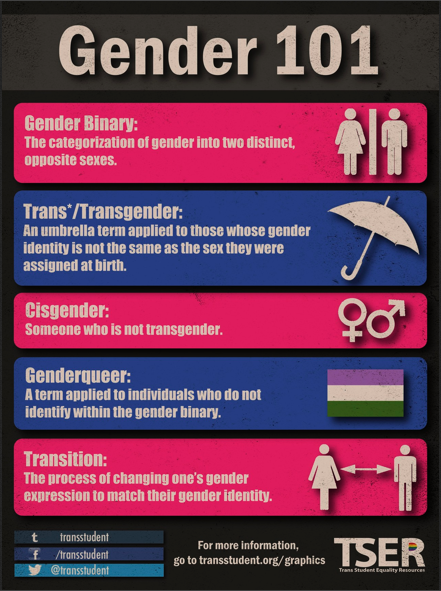
Gender 101

Photo credit by Trans Student Equality Resources – http://transstudent.org/gender101

I think the relationships that had the highest impact on my identity the most were my family members. It was difficult for my mom to adjust to my new and different identity, and for her to recognize my partner. It was even more challenging for my brothers and their wives to get used to my new preferred gender pronouns. I was persistent with communicating with them how I felt, which my communication skills got better as time went on. And the more they saw how I was leading a productive life, the more they realized I was becoming who I wanted to be. I think the times have changed a lot since I was a teenager. A lot of people are exposed to non-traditional ways of gender performance and sexual orientations. I think people aren’t as shocked as they used to be. I don’t think there’s complete acceptance yet. Acceptance is really on an individual basis, depending if people have friends or know someone who is a non-heterosexual, and/or non-cisgender person. There’s still a lot of stereotypes out there about Hmong folks who are gay, lesbian, bisexual, trans, or queer. The Hmong American society and the American society at large are not ready to move past those stereotypes. (The racial stereotypes are still a work-in-progress.)

Mainstream culture and the traditional Hmong culture still see things in black and white or binary. With that thinking, there’s no room for people who don’t fit neatly into those binary systems. I think the only way to really make this be a change is to be the doer. I live my life not as a man or a Hmong or a son or a husband. I live my life as me, and people find labels that they think best fits who I am. I feel people do that in order to find a commonality or something that they can relate to, which is quite innocent and unintentional.

My mom once told me a story of a distant aunt. She never married. When her parents died, she stayed living on her own. I believe she’s still alive today and is living somewhere in Laos or Thailand. I can’t say if this distant aunt is a closeted same-sex lover or asexual or anything else. But this story always stuck with me. And this story came out when I asked my mom if she knew of any queer folks back in Laos.

Marriage equality for couples who want to get married traditionally is still a big issue, even with the passing of the same-sex marriage bill in Minnesota. There’s a lot of politics involved in Hmong heterosexual marriages already. I don’t know how things like the bride price could be dealt with for a same-sex marriage. What about the spirits? Also, when one partner dies, who’s responsible for the last rites? I hope a more knowledgeable person of Shamanism and Hmong culture can figure this out.
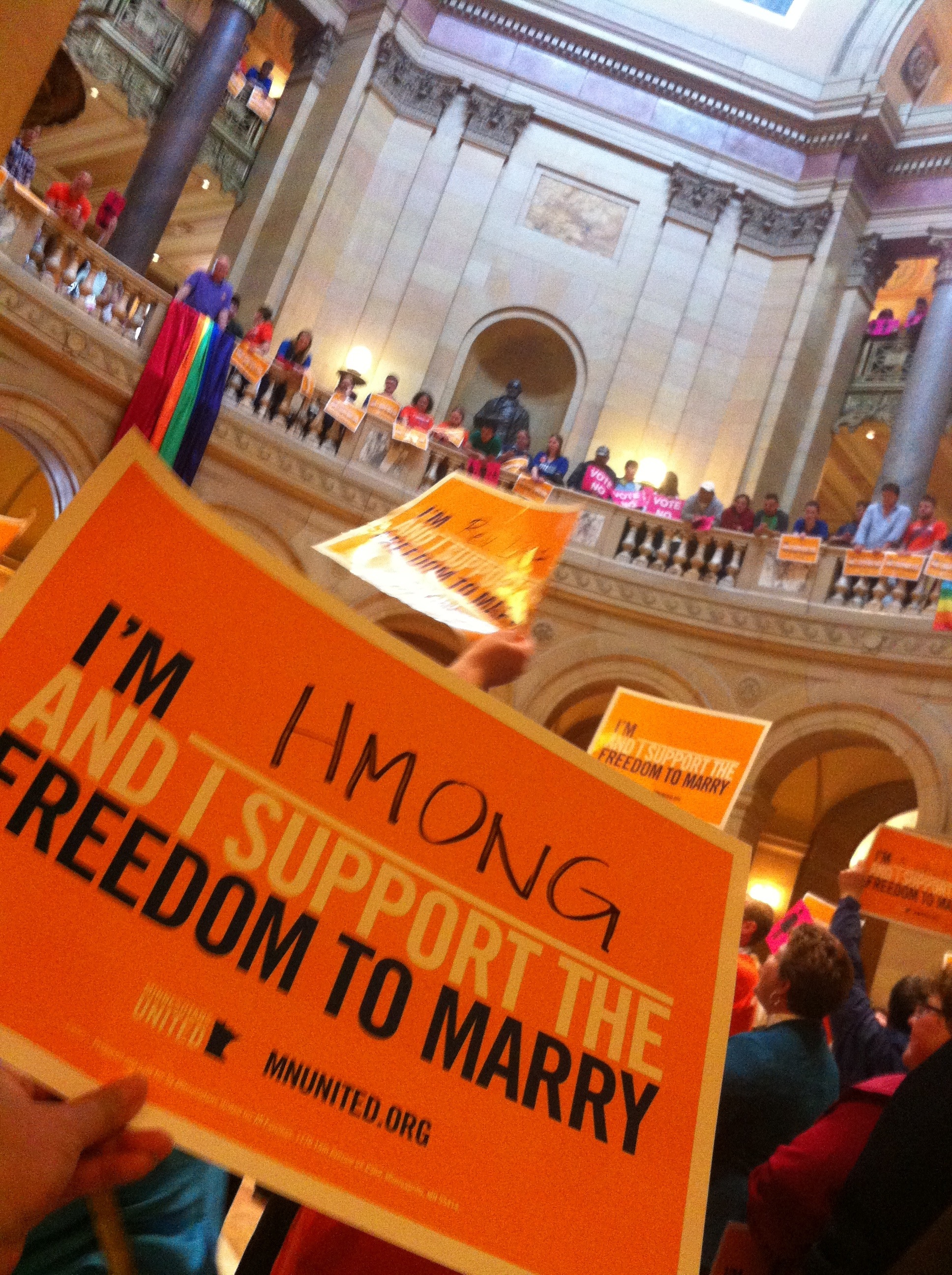
Hmong Freedom to Marry

Because I can “pass” as a man, I don’t find myself having to “come out” or “reveal” myself to people about my gender identity or sexual orientation. I like to get to know people on a nonsexual orientation and non-gender basis. In fact, I’ve made that my personal mission: talk one-on-one with elder Hmong people. Sooner or later, they find out that I’m different. I think I’ve been able to sway a few Hmong elders my way or at least get them thinking outside of the box. I want people to know me for me. I don’t want them to have false misconceptions about me just based on what they associate with a certain word. If people could get to know a person and not judge them based on the label that can be associated with that person, I believe that would be a good start to the world becoming a better place.

If you’re compel by Xiong’s story, we invite you (if you identify as Hmong LGBTQQI) to contribute your narrative to our collection and documenation by taking this 5 minute survey: http://tinyurl.com/HmongLGBTQQIStories

©Linda Her and MidWest Solidarity Movement, 2011 – 2013. All rights reserved. Unauthorized distribution with the intent to sell, use and/or duplication of these images, audio, video, stories, blog posts, and materials on this blog without express and written permission from this blog’s authors and/or owner is strictly prohibited. Excerpts and links as stated by MidWest Solidarity Movement members may be used, provided that full and clear credit is given to Linda Her and MidWest Solidarity Movement with appropriate and specific direction to the original content.
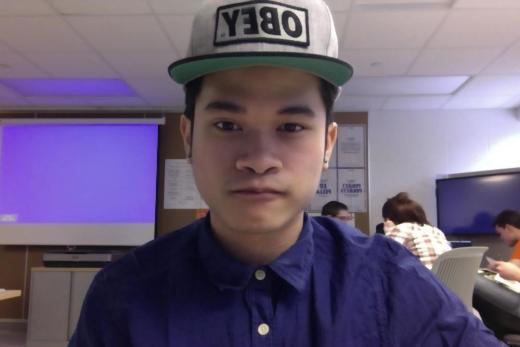
Being Gay and Queer in the Laotian Community

Danny K.

Check out our MWSM collective member Danny and his published piece on Little Laos on the Prairie: Being Gay and Queer in the Laotian Community

“One of the biggest thing that sets me apart from most Laotians is that I’m gay. I’m one of the few out gay Laotians in Minnesota and I don’t want it to be that way. There have been questions and curiosity if there are LGBTQ Laotians out there, and I am here to say, “Yes there are LGBTQ Laotians in the community, and yes we do exist.” We are more prevalent than the community thinks about, or are informed about internally and externally of the Laotian community.”

If Danny’s story compels you, please support his leadership and activism through donating $20, $30 or $50 to our Trans* and Queer Southeast Asian Organizer retreat Aug 17 and 18, 2013. Your donation will enable Danny, and Trans* and Queer Southeast Asian activists, organizers, and scholars in understanding the importance of social justice work, activism, and service learning in their community.

Click here to donate: Trans* and Queer Southeast Asian Organizers Retreat Fundraiser

Raising UP Calyvn’s Breaking Down the Walls of Disguise Narrative

Calvyn Moua

Story #7

Calvyn Moua is a 26 year-old man living in Minnesota. He identifies himself as Gay and a Christian.

I knew that I liked the same sex ever since I could remember.  If I had to put an age to it, I would probably say about six or seven. I just felt good or extremely happy when looking at other boys or males. Some kind of chemistry just hit me right when seeing a cute boy.

My mother told me a true story of someone she knew from Laos back in the days. She knew a girl in her village who liked girls and grew up marrying one. She acted like one of the boys ever since she was born. She would go hunting and fishing, as well as cut wood. Whatever job a man did, she would do, sometimes doing it better. She married her partner for about five years and then passed away when she drowned in the river while fishing. This time period was around 1960’s.

I believe that one of the most important thing that Hmong community has done to support LGBTQQI are the leaders standing up and fighting for issues that are important to our community. For example, (former Mn Senator) Mee Moua has voiced her support of the Hmong LGBTQQI community. I believe Hmong society in general still needs a lot more information on this subject because many of the older generation still see same-sex relationships as confusing or alien. I am not sure how homosexuality fits in the Hmong culture, but it should exist and fit in any culture.

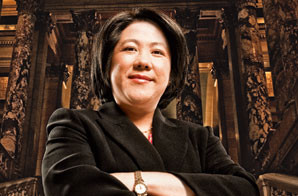
Former Mn Senator Mee Moua

The most important issue I am facing today is the misunderstanding of being gay. Many arguments about my sexuality among certain “friends” has made me very upset because I didn’t know that people can be so stubborn and naive. Again, the world, and not just the Hmong community, need more information and testimonies to show others that we are normal too.

I came out because it didn’t feel good to be hiding behind a wall that I wanted to break down. When that wall came down, it seemed like my world was so much brighter and healthier. I did not want to hide my true identity from my love ones because that hinders me from being one hundred percent (of who I am). I feel that my friends and family deserves the best from me. By coming out, I felt more comfortable around everyone. It was hard at first for my mother especially but she has come to respect and support me 100%. Nowadays, she even talks to my boyfriend who lives in Laos via skype. She is very happy for me. I love you MOM.

Calyvn Moua on top of the world now.

I just wished that I would have came out sooner, even though at that time it would have been harder, but at least I would have been happier. Nonetheless, I am out and never felt better. I would like to say I am out to everyone, but unfortunately I am not. I am proud to say I am out to all my friends and my intermediate family.

©Linda Her and MidWest Solidarity Movement, 2011 – 2013. All rights reserved. Unauthorized distribution with the intent to sell, use and/or duplication of these images, audio, video, stories, blog posts, and materials on this blog without express and written permission from this blog’s authors and/or owner is strictly prohibited.

Excerpts and links as stated by MidWest Solidarity Movement members may be used, provided that full and clear credit is given to Linda Her and MidWest Solidarity Movement with appropriate and specific direction to the original content.
Pride Canvassing & Trans*/Dyke March at Twin Cities Pride, 2013

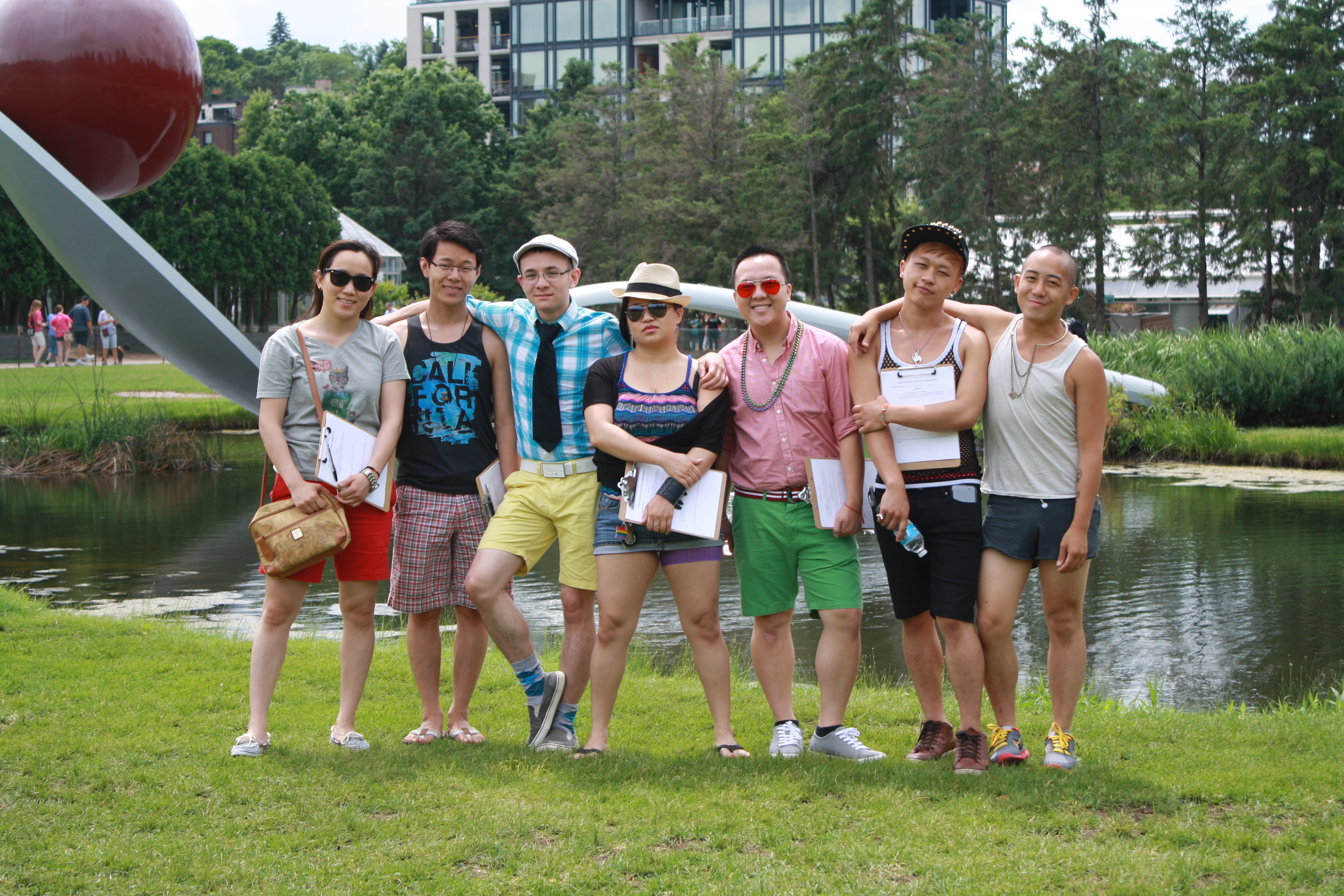
What an exciting summer this has been! This 2013, MWSM decided to take a different route at Twin Cities Pride (TC Pride). We recruited a team of 10 volunteers to go out and canvass the various non-profits and churches that were present and outreaching about their mission and services. For some of our volunteers, this was their first time at Pride, and canvassing so we made sure to pair them up with someone with canvassing experience. We wanted to find out from the many organizations and churches to identify what services and programs they provided, so we know where to connect our community members to , and possibly collaborate in the near future. The whole team had long and great conversations about the services, leadership dynamics, goal measurements, how does intersectional justice look like in their work, and how do they address institutional racism, white privilege and supremacy. We talked to about 15 organizations and churches, and will be talking to more in the next month to then produce a data report Fall 2014. We will keep you updated!

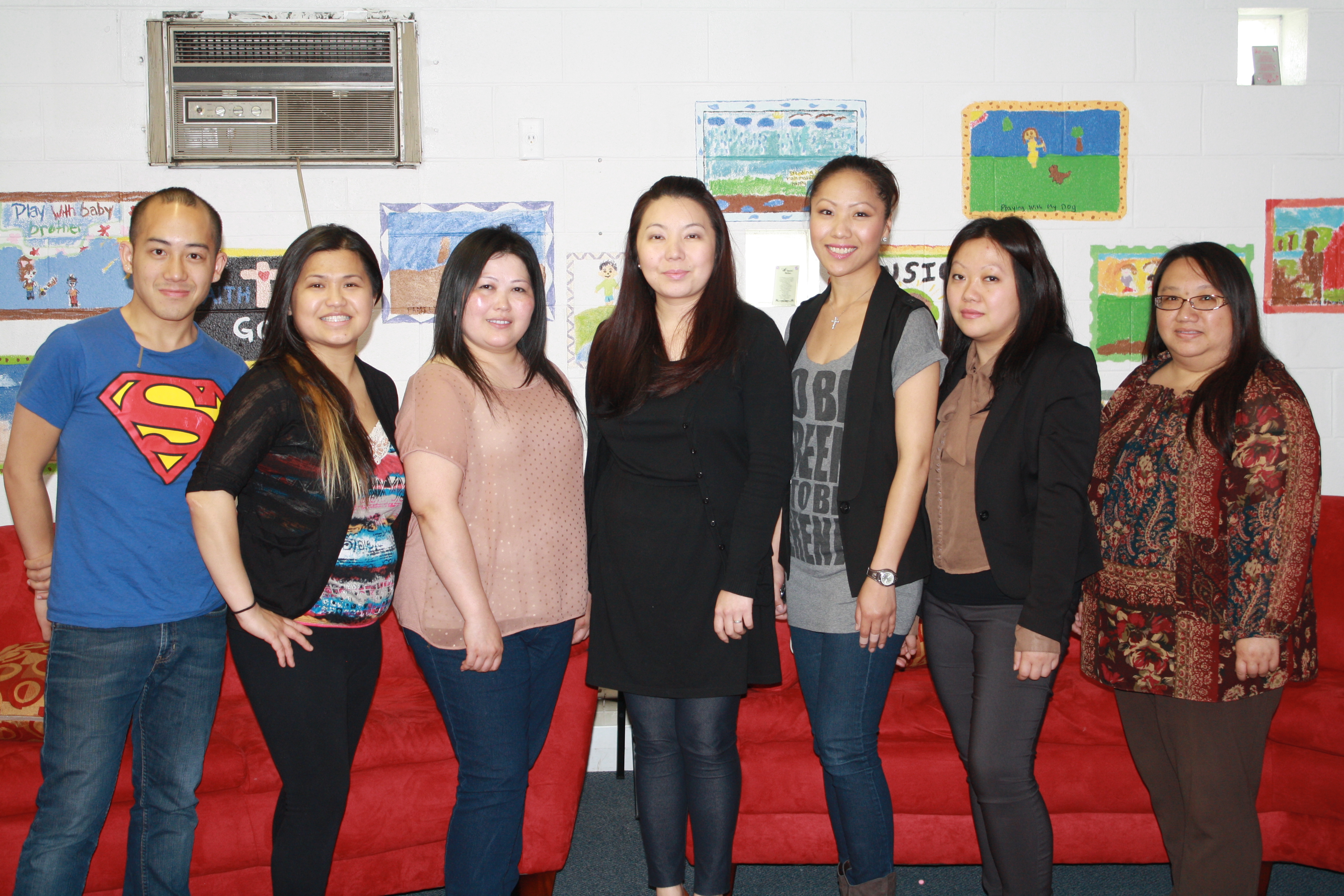
Meet the team that canvassed!

#MG_4100

#MG_4114

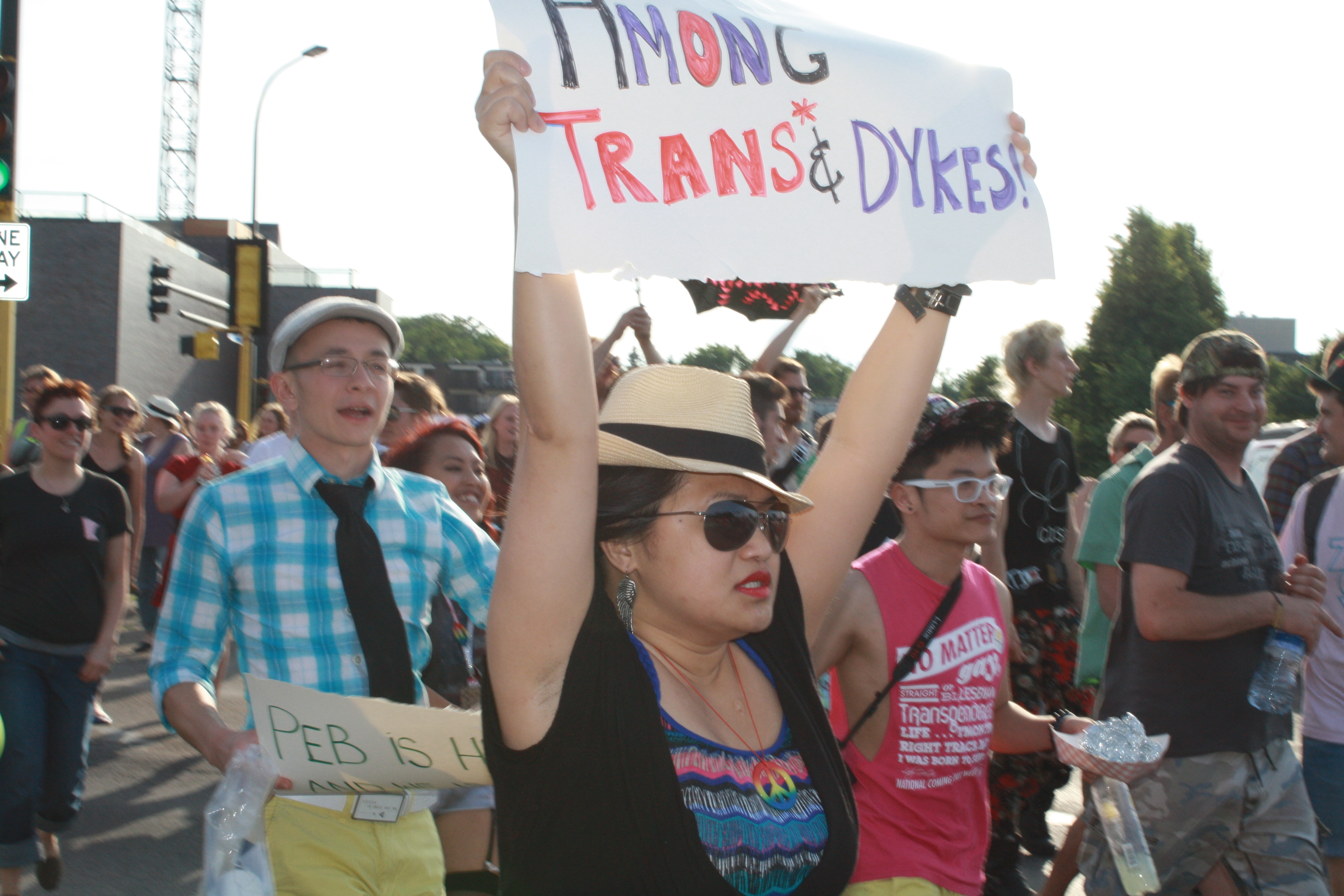
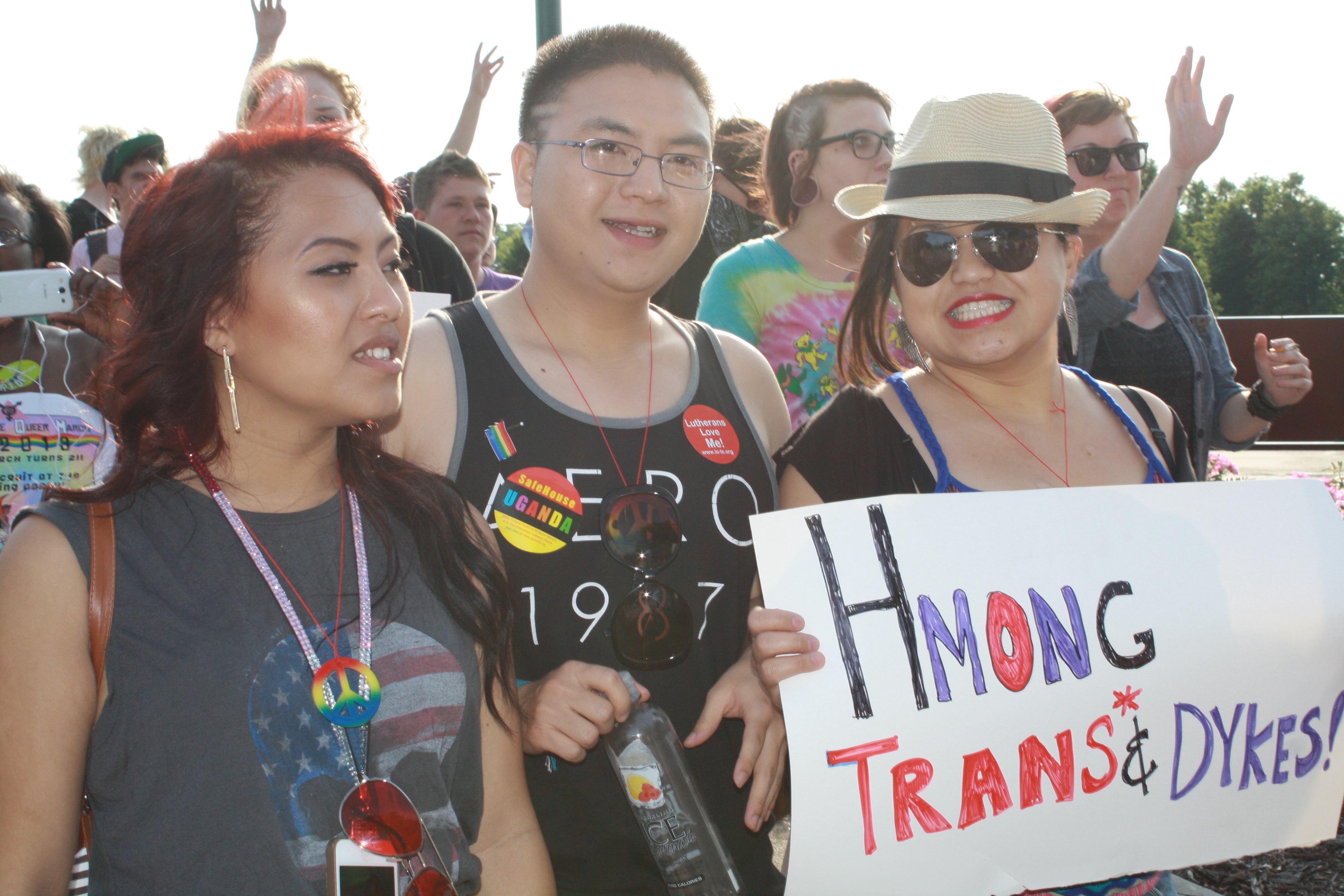
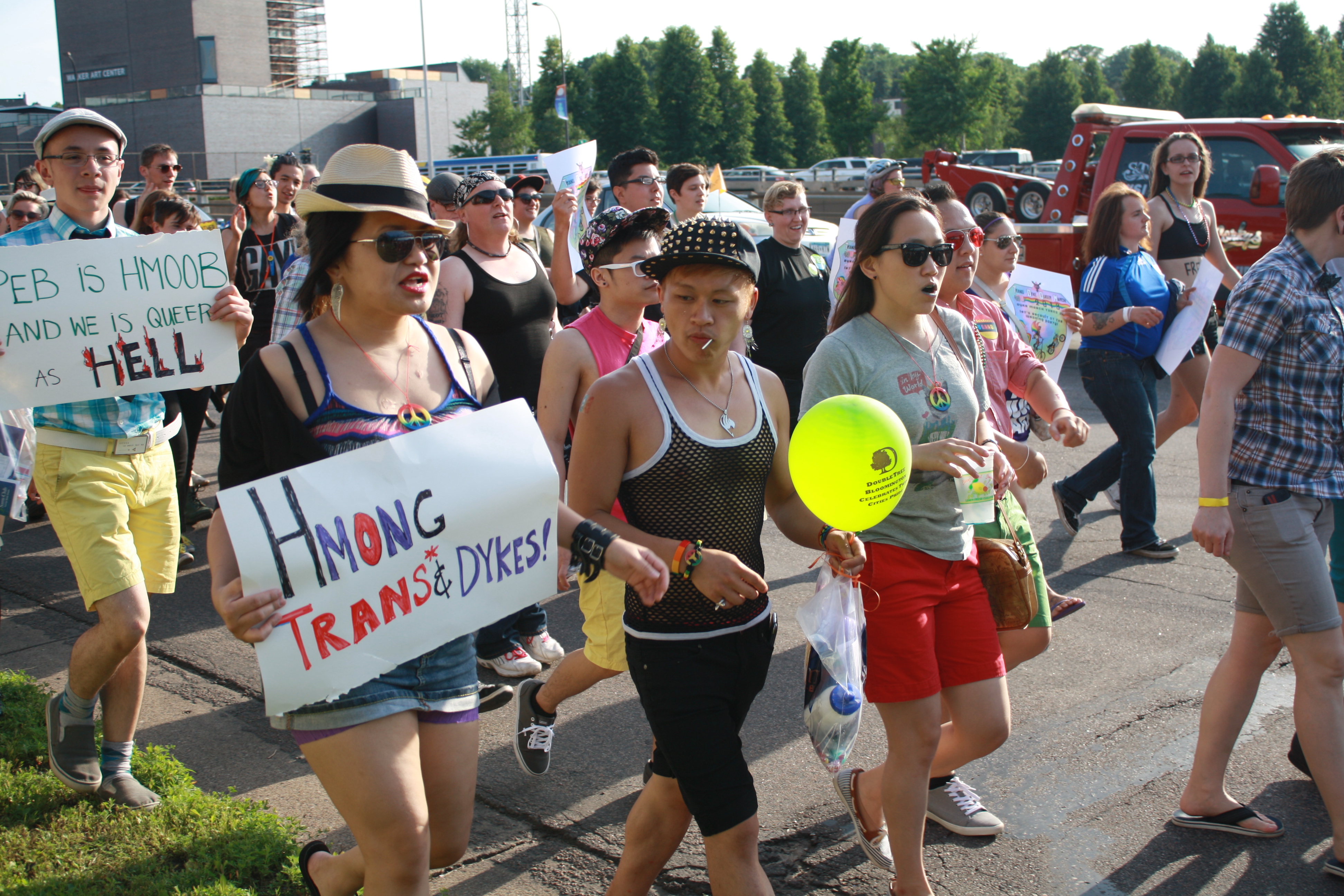
After a morning’s hard work of canvassing at TC Pride, MWSM joined and marched in solidarity with the Trans*/Dyke March.

#MG_4121

#MG_4124

#MG_4126

#MG_4128

#MG_4129

#MG_4130

#MG_4131

HAPPY PRIDE!

Raising UP the Coming OUT Process that Takes Time & Courage.

Kong C.

Story #2

The first time I ever noticed I had strong attractions or at least a feeling that I liked boys was when I began wanting to play more and more with my best friend who was a boy. I would say we were around six years old at the time. I thought it was normal because I thought it was just an extension of our friendship. I was taught that boy should only befriend and play with other boys, so the feelings that I felt and the interactions that occurred between us always felt right, never wrong.

The Hmong Community, I think for the most part is split in between the middle about my sexuality, and LGBTQ. Traditional family and community members still shun the idea of a same-sex couple being together. On the other hand, the other half, non-traditional is very supportive because they either know of LGBTQ folks and/or are very accepting and supportive. Regardless of this, I think we still continue to exist in the shadows of our culture. We are seldom talked about and rarely thought of. The older Hmong LGBTQ generations have had their own battles that are on a whole different level in which we as the younger generation of queer Hmong Americans cannot experience. We exist in the eyes of the larger Hmong community because they have seen us, yet we are swept under the rug to in order to perpetuate the idea that Hmong LGBTQ people do not exist and that it is only white people who are LGBTQ. Thus, this makes others think that being gay is a “white” or “western disease.” However, we do exist and are making our voices heard everyday in order to gain visibility and to educate our community. I have heard of past Hmong LGBTQ stories from friends who work closely with these older generations. I have also personally met a person who is of the older Hmong LGBTQ generation. However, one of the biggest issues that I face as a Hmong LGBTQ is that I cannot openly express my love towards my partner in public without receiving stares. To other people, it is something of another world, but to us, our values with love and relationship are if not similar, like heterosexual couples.

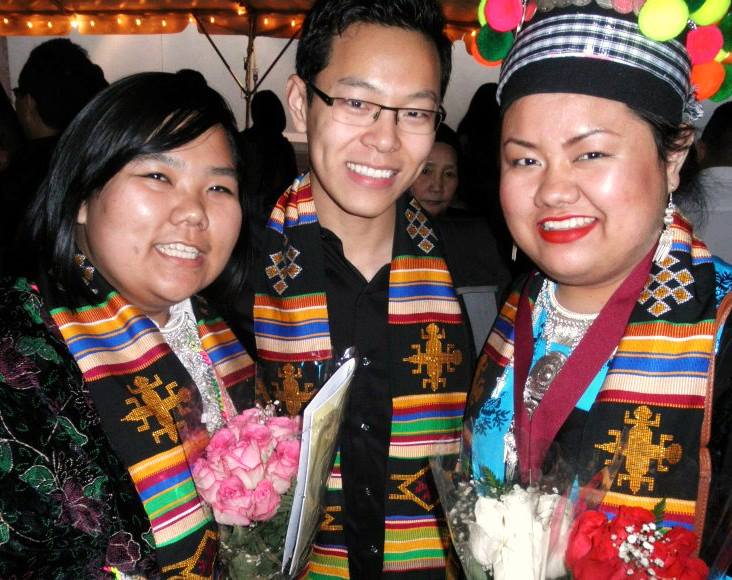
Kong's Graduation & Friends

My coming out story was a two-year production. I first came out to myself and accepted who I was. I had doubts in my mind. I wanted to be “normal,” but in the end, my first experience at love gave me the strength to follow my heart. I slowly came out to my close friends one by one. As I came out to my friends and family, all of them accepted my sexual orientation and loved me even more. I chose not to tell some friends and family because I knew how they would react based on what kind of person they are. However, many of them slowly found out anyways and were overall, accepting of me. Coming out to my family was an accident, but it was a good accident. My parents were the last to know on my list of coming out to. They were not very supportive of the idea at first but half a year later down the road, they were at my college graduation and still supported me in ways of gifting me with a new car. Although my current partner is still referred to as my “friend,” it is still a far better progress than I ever thought it would have become in such a short time span. I think that when you first realize and accept yourself as being LGBTQ, and gain more confidence. You become a person with an open mind that can articulate your experiences that help shape people’s minds and heart towards acceptance. I know that if I did not take time to explore and embrace my sexuality as a gay Hmong man, I would not understand who I am, and not come out. I would have lived an unhappy life, hiding and fearing about my sexuality. I would still be facing the world with doubts. It’s a process when you come out, and a process that takes time and courage to understand.

Kong  C.

HAPPY PRIDE! Celebrate with us by filling out the 3 minute survey here to share your story:

http://tinyurl.com/HmongLGBTQQIStories

©Linda Her and MidWest Solidarity Movement, 2011 – 2013. All rights reserved. Unauthorized distribution with the intent to sell, use and/or duplication of these images, audio, video, stories, blog posts, and materials on this blog without express and written permission from this blog’s authors and/or owner is strictly prohibited.

Excerpts and links as stated by MidWest Solidarity Movement members may be used, provided that full and clear credit is given to Linda Her and MidWest Solidarity Movement with appropriate and specific direction to the original content.
TAKE THE SURVEY BELOW: Raising Up The Hmong LGBTQQI Narratives: Coming OUT Process

PLEASE TAKE THE SURVEY HERE: http://tinyurl.com/HmongLGBTQQIStories

Fam, Friends and Community!

PLEASE TAKE THE SURVEY HERE: http://tinyurl.com/HmongLGBTQQIStories

You are invited to share your Coming OUT stories and progress as Hmong lesbian, gay, bisexual, transgender, queer, questioning and intersex (LGBTQQI) individuals. We will be sharing your Coming OUT stories on our Blog: mwsmovement.com. This is an ongoing effort, and we will be posting the first story next Friday, June 21 to celebrate Pride Month. Sharing your story can transform other Hmong LGBTQQI’s lives, and be a story of change to educate others, especially our Hmong parents, family, and community. Celebrate Pride Month with us by taking 5-10 minutes of your time to help raise our narratives, click on this link now: http://tinyurl.com/HmongLGBTQQIStories


Please share widely!

Thank you,

Linda

Intersectional Justice Advocacy and Ally 101 Training with Hmong American Women Association’s Staff

Earlier this week, Linda and I traveled to Milwaukee, WI to present MidWest Solidarity Movement’s Intersectional Justice Advocacy and Ally 101 training with the Hmong American Women Association’s staffs. The workshops entitled critical comprehension of sex, sexuality, gender, and the role of alliance through a critical Hmong cultural lens. Afterwards, we were able to lead a discussion with Hmong women victims and survivors in regards to LGBTQ identities in the Hmong community.

Image

Sign Your Name to Say Thanks to Mee Moua, Dr. Neal Thao & Senator Foung Hawj

Image

Good Morning from Minnesota!!

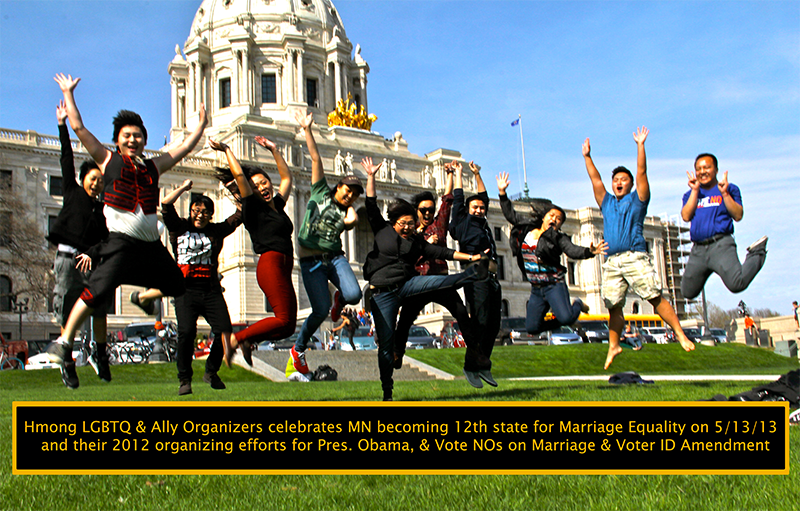
Family, Friends and Community, please take a moment to read & sign your name with us in the Thank You letters we will be delivering to Mee Moua, Dr. Neal Thao & Senator Foung Hawj. We want to acknowledge and say Thanks for their leadership and public support for Marriage Equality in Mn and LGBTQ rights. And please copy this post and share widely. Thank you!

CLICK HERE TO READ AND SIGN YOUR THANKS!