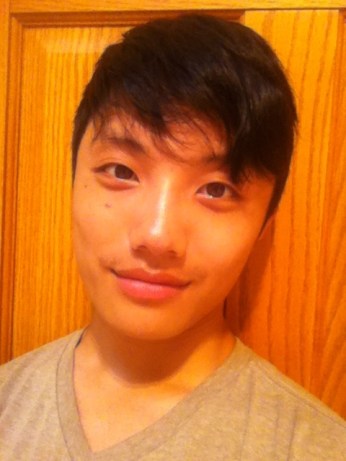
Sign Petition/Share for Tet Parade to Include LGBTQ Vietnamese Americans.

LGBTQ Vietnamese Americans Rally

Take a stance against discrimination, read, sign and share widely:

http://www.change.org/petitions/let-vietnamese-american-lgbtq-people-participate-in-the-2014-t%E1%BA%BFt-parade


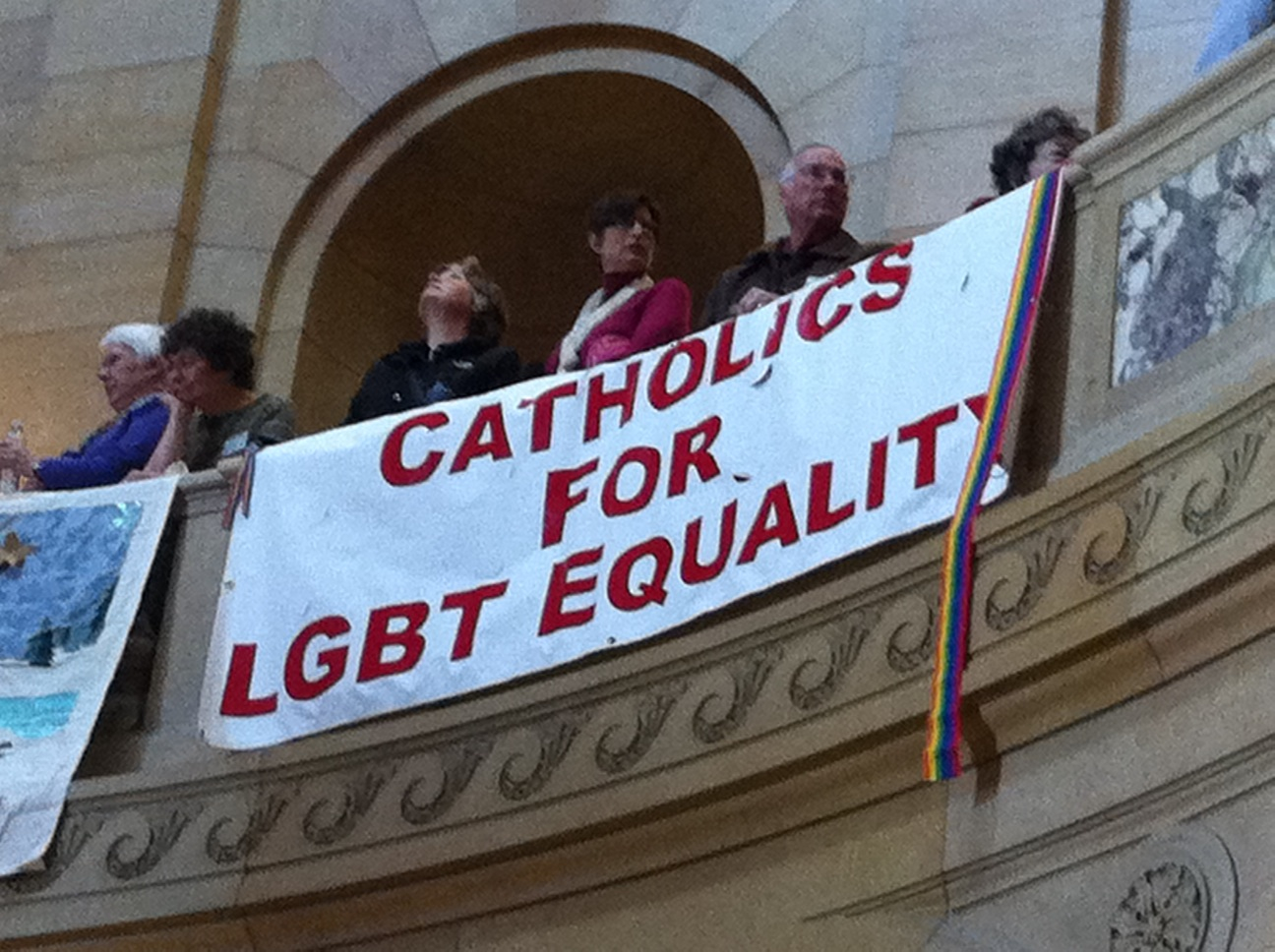
The Vietnamese American LGBTQ community needs your support to sign their petition: Let Vietnamese-American LGBTQ people participate in the 2014 Tết Parade.  LGBTQ Vietnamese American have been part of the Tet Parade in the past years until recently when new leadership voted to ban Vietnamese LGBTQ people from participating.

When you start excluding people because they fundamentally are not like you or because you’re homophobic that’s when you start dividing up community and enforcing discrimination.


Take a stance against discrimination, read, sign and share widely:

http://www.change.org/petitions/let-vietnamese-american-lgbtq-people-participate-in-the-2014-t%E1%BA%BFt-parade

2013 Minnesota Hmong New Year Outreach

image

Today at the Hmong New Year in St. Paul, our collective canvassed and outreach to over 100 people including young people and elders, and over a dozen institutions.

We handed out MWSM pamphlets, Our Narrative and Movements: Peb Yog Hmoob Lesbian, Gay, Bisexual, Queer & Transgender. The pamphlet includes common questions of ‘coming out’ for Hmong LGBTQ people, and common questions about acceptance for Parents/Family with LGBTQ children/family members. To personalize, we quoted Hmong LGBTQ individuals who have contributed their diverse experiences in ‘coming out’ from our 2013 Hmong LGBTQQI Narratives Campaign. Lastly, you can read about the resources, trainings, researches and campaigns we currently have and are working on to enable us to be equipped in supporting our LGBTQ family and community members.

1463557_10152405659845410_703226879_n

Half of MWSM members @HNY2013

Raising UP JV’s Transformation and Desire for Consciousness Narrative

savingface1

Saving Face (2004)
queerious.com

Story #17

JV is a 25 year old, Hmong American, identifies as a lesbian and residing in Wisconsin.

When I was 13 years old. I was felt confused, unsure of why I had such feelings for the same-sex. So I did what every pre-teen did, I hid it from myself and everyone else. I tried my best to be normal.

I’m out to my parents, all my cousins, and my friends. I made choice not to come out to my elders, out of respect for my parents. I choose to come out because I didn’t want to live a lie anymore. I was tired of living a double life. I was tired lying to people I love. When I first came out it was hard, my parents took really hard. They didn’t speak to me for a few months. I mean I understood why they were so hurt by choice. It’s been eight years now since came out to my parents and things have changed a lot. My parents have done 180 and they support my choice. I mean don’t get me wrong there is still a longs way to go but I’m truly blessed to have wonderful parents. I’m also very proud of both them for making such a great change.

I honestly don’t feel that the Hmong Community is very supportive. I feel as if we exist only in the shadows of the Hmong culture because it is such taboo for our culture. It’s something that is frowned upon and never spoken of. Though we exist, we hide to save face.

I think that the main issues is just acceptance from our community. We’re all still Hmong, even though we’re gay, lesbian, transgender, bi, or queer. Hmong blood pumps our veins and into our hearts. We are all Hmong before we’re anything else, so why can’t we be accepted?

tumblr_mrzrcq5DXo1rq7smco1_500

hmongthrills.tumblr.com

If you’re compel by JV’s story, we invite you (if you identify as Hmong LGBTQQI) to contribute your narrative to our collection and documentation by taking this 5 minute survey: http://tinyurl.com/HmongLGBTQQIStories

©Linda Her and MidWest Solidarity Movement, 2011 – 2013. All rights reserved. Unauthorized distribution with the intent to sell, use and/or duplication of these images, audio, video, stories, blog posts, and materials on this blog without express and written permission from this blog’s authors and/or owner is strictly prohibited. Excerpts and links as stated by MidWest Solidarity Movement members may be used, provided that full and clear credit is given to Linda Her and MidWest Solidarity Movement with appropriate and specific direction to the original content.

Don’t Buy Miss Saigon: Our Truth Project

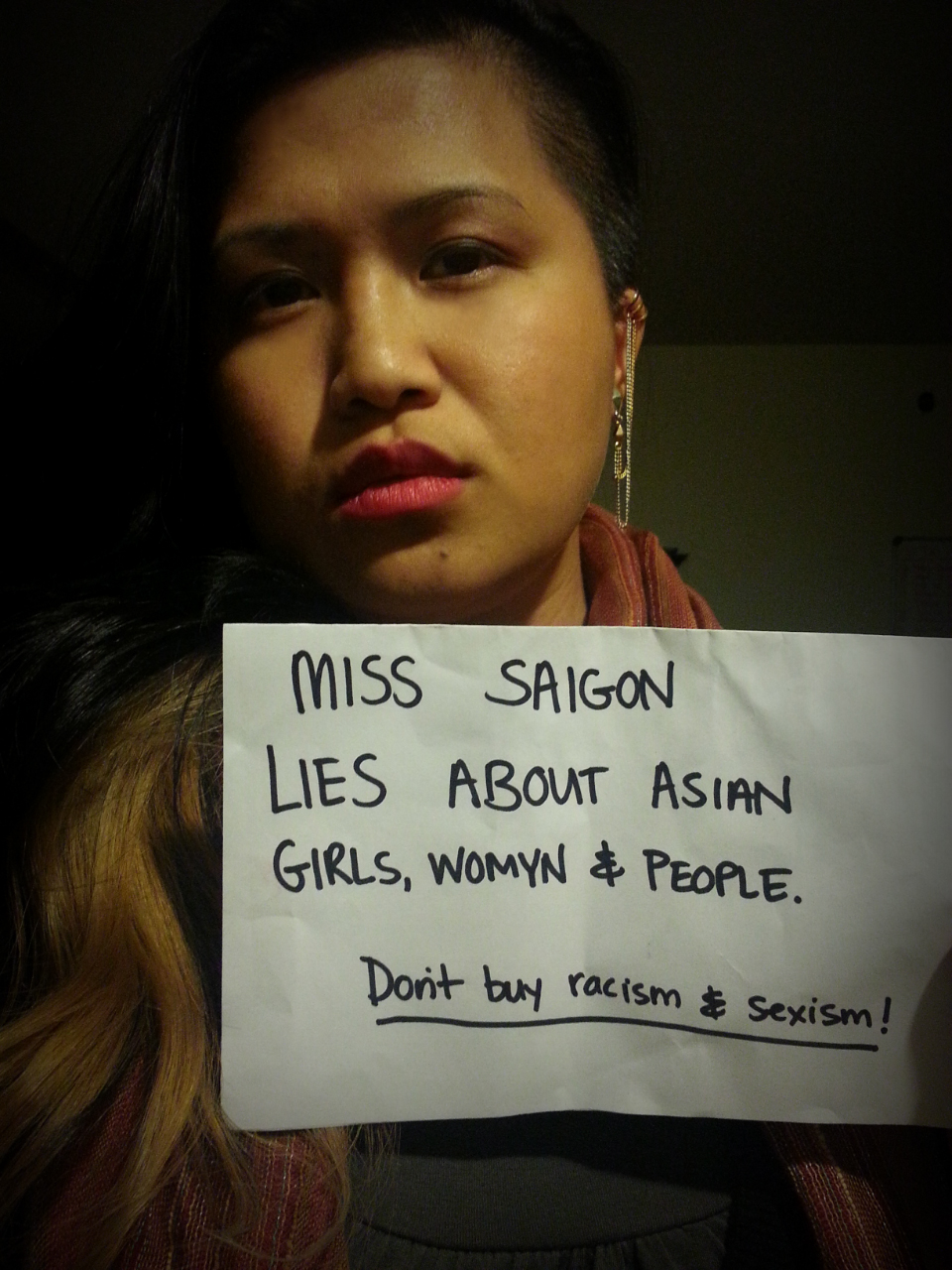
Linda Hawj – Miss Saigon Lies, Don’t Buy it! Boycott The Ordway Theater!


My name is Linda Hawj. I’m an artist, activist & organizer from Minnesota. As a 2nd generation, Hmong American, queer womyn of color, this is my truth.

What kind of Minnesota & country are we living in when Vietnamese people, Southeast Asians & Asian Americans, their history & experiences are compromised & violently eliminated repeatedly? All because White people & White Supremacy cries censorship about their White privilege no longer having the “freedom to express” their racist art. What’s truly sad & horrible is how White Supremacy have & continues to police & control what is Racial Justice & Equity, & the Non-Profit Organizations, leaders, politicians, funders & foundations who do “Racial Justice & Equity work” & serve the Southeast Asian, Asian American & Communities of Color. Your White Supremacy is all the Executives, Presidents, CEOs, Boards, Committees, funders & donors, majority all head by rich, White Privileged people that call the shots in their capitalist, political strategies.

3 Actions You Can Take to Support & Share to Mobilize:

1) SUBMIT YOUR TRUTHS HERE: http://dontbuymiss-saigon.tumblr.com/

2) SIGN OUR PETITION HERE: http://act.engagementlab.org/sign/DontBuyMissSaigon?source=field

3) The Don’t Buy Miss Saigon Coalition is taking both individual and organizational endorsements of its statement to stand in solidarity to end Institutional racism, sexism & colonialism. Contact us for more information: dontbuymisssaigon@gmail.com

Raising UP Xyooj Xub’s Struggle for Love and Acceptance Narrative

xyoojxub

Story#16

Xyooj Xub is an 18 year old, Hmong American and identifies as a Gay/Queer male residing in Minnesota.

Ever since I could remember (I’m guessing the earliest age being 4, and self-identifying as a boy for the most part of my life) I’ve always felt a romantic pull to other boys and men. I found boys and men attractive and often wished I could’ve expressed that; however, even at that age, I recognized that it was dangerous to say such things. I quickly learned from one incident in which I told my cousins and siblings I thought one boy was cute, that ridicule would soon follow.

I came out to select individuals when I was 16 and 17 because I felt I was hiding a part of who I am, and that didn’t feel good. I came out to my friends, sister, and twin brother and I found that they were okay with who I am. However, for various reasons that aren’t exclusive to sexuality, I’ve dropped or drawn back from many of my relationships with these people. My immediate family, a select few of cousins, and most friends, are aware of my sexuality. The thing I’ve realized is that I don’t need to constantly assert what my sexuality is to everyone. It’s simply who I am and it’s my business, no one else’s to be concerned with. Other reasons why I choose to only reveal my sexuality to certain people are my concerns of safety, comfort, and fear of discrimination.

I don’t speak openly with my family about my life. I deal with depression that partially stems from my dysphoria about my sexuality, thoughts on gender, disconnection from my Hmong culture, and more. I don’t have much support from Hmong folks in general, and I find that on top of dealing with a variety of forms of oppression (racism, heterosexism, classism, etc.) from mainstream America, I must also do so within my own community. It puts that much more strain on my mind. Somedays, it becomes too much and I break a bit.

From personal tales of others, I’ve heard of queer Hmong youth being thrown out of their homes, disowned by their families, rejected by peers, or were told not to reveal their sexual identity to others in the family and community. In the worst case scenario, death occurs. The most prominent story I can recall was reading about the young lesbian couple, Pa Nhia Xiong (17 y/o) and Yee Yang (21 y/o), who committed suicide together in their despair of knowing their love would not be accepted by their families or community. A link to their story can be found here: http://groups.yahoo.com/group/asianamericanartistry/message/763.

I don’t feel supported in general by the Hmong community. There aren’t even words in our language to describe our existence and I know well enough to say that I and other queer Hmong folks of this time can’t have been the first to have felt these ways. I feel I’m on the margins of margins with the identities that I identify with. I feel that, with not many resources or guidance available, many queer Hmong folks here in the U.S. get swept into the mainstream LGBTQ scenes, which itself has so many issues (white-focused, racist, misogynist, transmisogynist, classist, fat-shaming, body-shaming, etc.). I had to figure a lot of things out for myself and put forth a lot of effort to find resources that would help me better understand what healthy acceptance/love of myself and others meant. I wish this struggle didn’t have to exist for so many folks already struggling and I wish there were more available resources to prepare queer Hmong folks for a number of things in life.

If you’re compel by Xyooj Xub’s story, we invite you (if you identify as Hmong LGBTQQI) to contribute your narrative to our collection and documenation by taking this 5 minute survey: http://tinyurl.com/HmongLGBTQQIStories

©Linda Her and MidWest Solidarity Movement, 2011 – 2013. All rights reserved. Unauthorized distribution with the intent to sell, use and/or duplication of these images, audio, video, stories, blog posts, and materials on this blog without express and written permission from this blog’s authors and/or owner is strictly prohibited. Excerpts and links as stated by MidWest Solidarity Movement members may be used, provided that full and clear credit is given to Linda Her and MidWest Solidarity Movement with appropriate and specific direction to the original content.

Raising UP Sooya’s Family, Gender & Role Model Narrative

SX1

Story#15

Sooya Xiong is a 23 year old, Bisexual female, Shamanist residing in Wisconsin.

I was 12 years old when I knew that I was attracted to both genders. Was I confused? I sure was! My heart would start racing whenever I am around the “girl” with words that I can’t even describe. As for the “boy” it was more flirtation. It has been 10 years since I came out to my parents. The reason why I came out? Well, duh, I am positively sure that I liked both genders; that I was “gay.” I was in a “dark” phase at that time as a youth, and it was time to make a change. I wanted to be able to express myself and be accepted. I needed the family support, especially from my parents.

How did my parents take it? Of course they laugh at me because they thought that I was joking. The word “gay” has been use so much in the family to make fun of someone. It wasn’t until I kept bringing the subject up to my father to this day that he finally understands what it means. He knows I am “bi-sexual” and he supports me (however, we all know parents lecture you and hope that you will end up with the opposite sex).

SX2However it wasn’t until 2008 that I fully revealed myself physically to the entire family and extended families. After my high school graduation on that following Monday my sister shaved my head in our home in Chicago. My mother and siblings were also in the room. It sure did make me feel good because of the support I had. But then I was scared of my father’s reaction that he’ll flip out. He saw my baldness when he came home to Milwaukee the next day, but didn’t say anything. He just laughed. Now that’s a good sign. How did it make me feel? I felt relieved and happy! But then I was told to wear a wig whenever I attend “Hmong events” (which I completely understand why). My extended families and everyone else knew about my sexuality, but it was never really addressed or acknowledge. Some words were said to describe and address me here and there, such as “tomboy,” “hey, new boy,” “son” etc. The gender roles did not change, everyone still sees me as a Hmong woman encompassing the same respect, duties, chores, et.

Some of the issues that I am facing today is how can I as a person who identities both as Hmong LGBTQ and Hmong woman help the Hmong youth who are coming out. I believe I can be a support for other Hmong LGBTQ by providing a safe place for them, helping them deal with family issues, and creating a support system.

If you’re compel by Sooya’s story, we invite you (if you identify as Hmong LGBTQQI) to contribute your narrative to our collection and documenation by taking this 5 minute survey: http://tinyurl.com/HmongLGBTQQIStories

©Linda Her and MidWest Solidarity Movement, 2011 – 2013. All rights reserved. Unauthorized distribution with the intent to sell, use and/or duplication of these images, audio, video, stories, blog posts, and materials on this blog without express and written permission from this blog’s authors and/or owner is strictly prohibited. Excerpts and links as stated by MidWest Solidarity Movement members may be used, provided that full and clear credit is given to Linda Her and MidWest Solidarity Movement with appropriate and specific direction to the original content.

What Does Marriage Equality Mean for the Hmong American Community?

Make sure to grab your Hmong Today newspaper and check out one of our collective member, activist & scholar Kong Pha’s piece on ‘What Does Marriage Equality Mean For the Hmong American Community?’ Drop us a few comments, let us know what you think Marriage Equality means for the Hmong American community and to you.

Hmong Today Newspaper: Hmong Americans & Marriage Equality

Raising UP Yermay’s Family Acceptance & Recognition Narrative

Sept 099Story #12

Yermay Yang is a 33 year-old Hmong Queer Christian from Wisconsin.

 I first noticed that I was attracted to the same sex when I was in college. I realized that I was okay with liking beautiful women and that other people were not like me. When I finally understood what it meant to be a queer person, I felt liberated. My whole life made more sense.

 I wanted to come out so that I can live my life and not have this burden of hiding who I am. It was hard to have a relationship with my mother when I was still in the closet. When I finally told her, it felt like I could start to have a relationship with her again. Coming out was hard on me and my family. I am sure it was hard for my siblings as well because they also had to “come out” about having a queer sister. My father did not speak to me for a year. Through it all, I know my parents love me regardless and always welcome me into their home.

I am out to my family and close friends. My parents were the main people I officially needed to come out to and then they told others in my extended family. My life is not all about being queer so I only tell people I feel like it is needed.

 I do not feel that the Hmong community as a whole is supportive of LGBTQQI people. People still measure things in heteronormative terms. Sometimes queer people do not know how they can fit in within the larger Hmong community, so it makes it even harder for non-queer people to see how we as queer people can fit in. This is perhaps the reason why I have not heard of any past history or stories of Hmong LGBTQQI people.

 Finding acceptance and a place within the Hmong community is still an ongoing issue that Hmong queers face today. Sometimes being queer can take over a person. That is, they will only be known as that “gay person.” People start assuming things about what they are like and what they do. Because of this distorted view on what it means to be a LGBTQQI person within the Hmong community, Hmong queers find it even more difficult to live their lives.

thecolu.mn

If you’re compel by Yermay’s story, we invite you (if you identify as Hmong LGBTQQI) to contribute your narrative to our collection and documenation by taking this 5 minute survey: http://tinyurl.com/HmongLGBTQQIStories

©Linda Her and MidWest Solidarity Movement, 2011 – 2013. All rights reserved. Unauthorized distribution with the intent to sell, use and/or duplication of these images, audio, video, stories, blog posts, and materials on this blog without express and written permission from this blog’s authors and/or owner is strictly prohibited. Excerpts and links as stated by MidWest Solidarity Movement members may be used, provided that full and clear credit is given to Linda Her and MidWest Solidarity Movement with appropriate and specific direction to the original content.