Raising UP the Coming OUT Process that Takes Time & Courage.

Kong C.

Story #2

The first time I ever noticed I had strong attractions or at least a feeling that I liked boys was when I began wanting to play more and more with my best friend who was a boy. I would say we were around six years old at the time. I thought it was normal because I thought it was just an extension of our friendship. I was taught that boy should only befriend and play with other boys, so the feelings that I felt and the interactions that occurred between us always felt right, never wrong.

The Hmong Community, I think for the most part is split in between the middle about my sexuality, and LGBTQ. Traditional family and community members still shun the idea of a same-sex couple being together. On the other hand, the other half, non-traditional is very supportive because they either know of LGBTQ folks and/or are very accepting and supportive. Regardless of this, I think we still continue to exist in the shadows of our culture. We are seldom talked about and rarely thought of. The older Hmong LGBTQ generations have had their own battles that are on a whole different level in which we as the younger generation of queer Hmong Americans cannot experience. We exist in the eyes of the larger Hmong community because they have seen us, yet we are swept under the rug to in order to perpetuate the idea that Hmong LGBTQ people do not exist and that it is only white people who are LGBTQ. Thus, this makes others think that being gay is a “white” or “western disease.” However, we do exist and are making our voices heard everyday in order to gain visibility and to educate our community. I have heard of past Hmong LGBTQ stories from friends who work closely with these older generations. I have also personally met a person who is of the older Hmong LGBTQ generation. However, one of the biggest issues that I face as a Hmong LGBTQ is that I cannot openly express my love towards my partner in public without receiving stares. To other people, it is something of another world, but to us, our values with love and relationship are if not similar, like heterosexual couples.
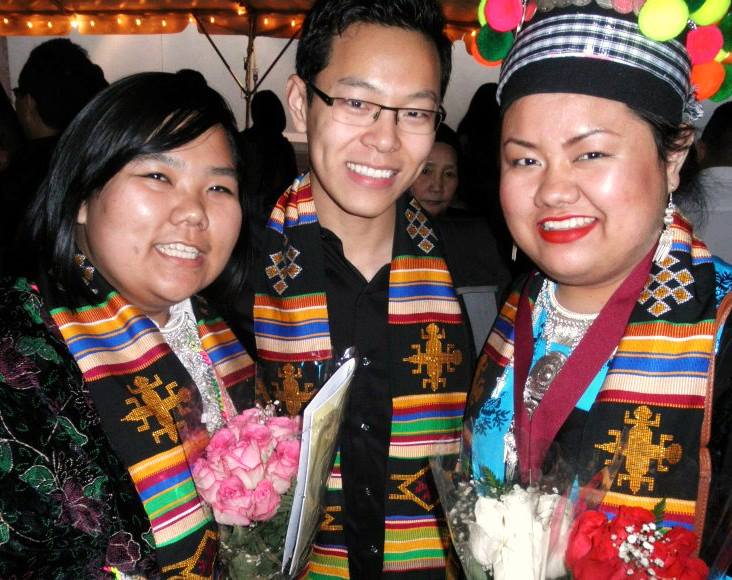
Kong's Graduation & Friends

My coming out story was a two-year production. I first came out to myself and accepted who I was. I had doubts in my mind. I wanted to be “normal,” but in the end, my first experience at love gave me the strength to follow my heart. I slowly came out to my close friends one by one. As I came out to my friends and family, all of them accepted my sexual orientation and loved me even more. I chose not to tell some friends and family because I knew how they would react based on what kind of person they are. However, many of them slowly found out anyways and were overall, accepting of me. Coming out to my family was an accident, but it was a good accident. My parents were the last to know on my list of coming out to. They were not very supportive of the idea at first but half a year later down the road, they were at my college graduation and still supported me in ways of gifting me with a new car. Although my current partner is still referred to as my “friend,” it is still a far better progress than I ever thought it would have become in such a short time span. I think that when you first realize and accept yourself as being LGBTQ, and gain more confidence. You become a person with an open mind that can articulate your experiences that help shape people’s minds and heart towards acceptance. I know that if I did not take time to explore and embrace my sexuality as a gay Hmong man, I would not understand who I am, and not come out. I would have lived an unhappy life, hiding and fearing about my sexuality. I would still be facing the world with doubts. It’s a process when you come out, and a process that takes time and courage to understand.

Kong  C.

HAPPY PRIDE! Celebrate with us by filling out the 3 minute survey here to share your story:

http://tinyurl.com/HmongLGBTQQIStories

©Linda Her and MidWest Solidarity Movement, 2011 – 2013. All rights reserved. Unauthorized distribution with the intent to sell, use and/or duplication of these images, audio, video, stories, blog posts, and materials on this blog without express and written permission from this blog’s authors and/or owner is strictly prohibited.

Excerpts and links as stated by MidWest Solidarity Movement members may be used, provided that full and clear credit is given to Linda Her and MidWest Solidarity Movement with appropriate and specific direction to the original content.

Come Celebrate MINNEAPOLIS PRIDE with Us!


HAPPY PRIDE WEEK! Come Celebrate Minneapolis Pride with us and meet other Hmong LGBTQ people! We have awesome activities that you can have FUN and learn at the same time:

  1. History of PRIDE through multiple communities and their stories.
  2. What is PRIDE beyond the glitz and glam?
  3. Where do you, we belong in the history of PRIDE? Mapping and documenting our stories into Pride History.
  4. Learn & research about LGBTQA organizations in your area that provide services you need.
  5. March with us at the Trans and Dyke March!
  6. Soulfriday Dance Party.

*If you haven’t filled the Raising UP the Hmong LGBTQQI Narrative Survey, please do so here: http://tinyurl.com/HmongLGBTQQIStories

For more information about celebrating Minneapolis Pride with us, please contact us at: linda@mwsmovement.com or txoov@mwsmovement.com. Thank you!

Raising Up DreamingInJune’s Pansexual-Queer Narrative

Image

Story #1

DreamingInJune is a Hmong American female residing in California.

I identify my sexual orientation as Pansexual-Queer and I am Atheist. I first noticed I was attracted to the same-sex during high school. I was never crazy about boys unlike the majority of my girl friends who were in and out of opposite-sex relationships. I tried to talk to boys but never took that next step of being in a relationship. One day, one of my siblings began dating someone of the same sex. I had always kept an open mind about homosexuality [same-sex relationships] because I read yuri and yaoi, which were manga books that had characters in same-sex relationships. I began thinking about my own sexual identity and knew I was always mentally attracted to girls, so I didn’t see anything wrong with keeping an open mind if a girl wanted to date me. I changed my sexual orientation from straight to bi-curious because I didn’t want to restrict myself from experiencing relationships with either just a woman or a man.

I am using this DreamingInJune pen name for my own confidentiality because I am not out to my parents or relatives. They suspect that I am queer because I showed little to no interest in men, marriage, or having children. Once, my mom had asked me if I was a lesbian because I attended an all-girls college and never had a boyfriend during that time. My mom brought it up because one time I was trying to cheer up my sister who was dealing with low self-esteem, I joked with my sister that I would date her if I was a guy. At that time, I told my mom that I wasn’t a lesbian, because I am still trying to understand my own sexuality, and didn’t want to share that with my parents until I figured it out. Most of my siblings have been open-minded about me because they have explored their own sexuality and had been in relationships with same-sex partners or explored.

I am out to my friends and the larger LGBTQ community. The first time I came out to friends was between 2005 and 2006 when two of my friends wanted to add me on myspace. They saw my sexual orientation as bisexual and they asked me, “You’re BISEXUAL?” and I replied, “Yeah, I’m pretty sure I am. I’m attracted to both genders.” After that, my two friends started to scoot their chairs further away from me. I stared at them and said, “Just because I’m bisexual, doesn’t mean I’m going to jump on you.” They replied, “Oh,” and scooted back some more. It’s silly that they both found me on Facebook and later on, and I discovered that one of them identifies herself as a lesbian.

I feel that there is a rising positive energy of support for Hmong LGBTQ people that is beginning to exist in the Hmong community. I believe that the younger Hmong generation are more supportive of LGBTQ issues and people in their willingness to have dialogues about it. I have had conversations with many younger Hmong folks because they know someone who identifies as LGBTQ. It seems that the older generation is confused about the experiences and what it means to be LGBTQ, because of the language and cultural barrier. There is no word for gay or lesbian in the Hmong language, so it is difficult to explain what the LGBTQ experience is to the older Hmong generation. Another reason is because they aren’t exposed to it and when they are, they do not want to talk about it.

My first time hearing about Hmong LGBTQ people was in 2009 while I was writing my ethnography paper. I found the article in Fresno Bee Newspaper, “Embracing the Forbidden | Pa Nhia Xiong,” http://mn.gov/capm/pdf/HmongTeenSuicideReport.pdf. This was one of the first articles that I discovered that had content documenting Hmong LGBTQ issues and people.

I think that one of the many problems that the Hmong LGBTQ community are facing are the individual cliques that exist. The community is not solidarity as with each other, so they only want to be associated with friends that have the same sexual orientation and/or interests. Another issue is the lack of activism and presence of Hmong LGBTQ people in Queer or larger spaces. By this, I do not mean that all Hmong LGBTQ individuals need to be activists but be informed to take some sort of step forward when the common theme of our struggles are having to be one foot out of the closet and the other in to appease our families or harmful policies leaving us vulnerable to hate crimes and speeches.

An issue I would like to bring up with the Hmong LGBTQ community is to have conversations around virginity and sex. I have never been in a relationship nor a intimate sexual relationship with another person before and I want to talk about what it means to be a virgin. I’m not saving my virginity until marriage nor am I in a rush to lose it. It’s about finding someone, trusting them, having consent, and having good vibes with that person. So far, I haven’t found that person, but I have been criticized and pressured by both straight and LGBTQ folks to lose it. By that, they tell me to get drunk one night and do it, or to find an acquaintance and do it, but I can’t separate sex and feelings. I hope to have more conversations with the community on peer pressure and consent. I hope that this story makes all of us reflect on our own story and gives one the excitement to share one’s own story through MidWest Solidarity Movement’s Raising UP the Hmong LGBTQQI Narratives.

©Linda Her and MidWest Solidarity Movement, 2011 – 2013. All rights reserved. Unauthorized distribution with the intent to sell, use and/or duplication of these images, audio, video, stories, blog posts, and materials on this blog without express and written permission from this blog’s authors and/or owner is strictly prohibited.

Excerpts and links as stated by MidWest Solidarity Movement members may be used, provided that full and clear credit is given to Linda Her and MidWest Solidarity Movement with appropriate and specific direction to the original content.
End Violence

Early Sunday morning of June 9th, Vone Moua, owner of Malina’ sports bar, was shot and killed inside his own bar and two others were injured.

What upset me the most is that no one deserve to have there lives be taken away, especially over a game of pool. Which also brings up another very important issues that we need to come together to end violence in our community.

Vone Moua, was a good man, he always had a smile on and have always opened his door for anyone. When you had a bad day, was feeling lonely, needed someone to talk to or a place to just enjoy the company of friends. Either if it was a Monday, Tuesday or Sunday, he was there and always welcomed you.

It wasn’t just a bar, it was the owners, the regulars that somehow becomes another family to you and especially a place that made you feel like you was at home. When you could just stop by for 30 mins just to say “Hi” and talk to his wife or a friend that was there, to cry and take a shot or two, to celebrate happy times, to eat Hmong food at 1 in the morning, to sit and have a cup of water when you were in a sports bar, or to just come sing the night away. Cause over there no one judged you, you came as you. Overall, it wasn’t just a place for me, but for the whole community.

20130617-113122.jpg

Candle light vigil for Vone Moua and pray to end violence in the community.

R.I.P my friend, you have changed our lives and it will never be the same. Thoughts and prayers goes out to you and your family.

-Mdy Yang

TAKE THE SURVEY BELOW: Raising Up The Hmong LGBTQQI Narratives: Coming OUT Process

PLEASE TAKE THE SURVEY HERE: http://tinyurl.com/HmongLGBTQQIStories

Fam, Friends and Community!

PLEASE TAKE THE SURVEY HERE: http://tinyurl.com/HmongLGBTQQIStories

You are invited to share your Coming OUT stories and progress as Hmong lesbian, gay, bisexual, transgender, queer, questioning and intersex (LGBTQQI) individuals. We will be sharing your Coming OUT stories on our Blog: mwsmovement.com. This is an ongoing effort, and we will be posting the first story next Friday, June 21 to celebrate Pride Month. Sharing your story can transform other Hmong LGBTQQI’s lives, and be a story of change to educate others, especially our Hmong parents, family, and community. Celebrate Pride Month with us by taking 5-10 minutes of your time to help raise our narratives, click on this link now: http://tinyurl.com/HmongLGBTQQIStories


Please share widely!

Thank you,

Linda

Intersectional Justice Advocacy and Ally 101 Training with Hmong American Women Association’s Staff

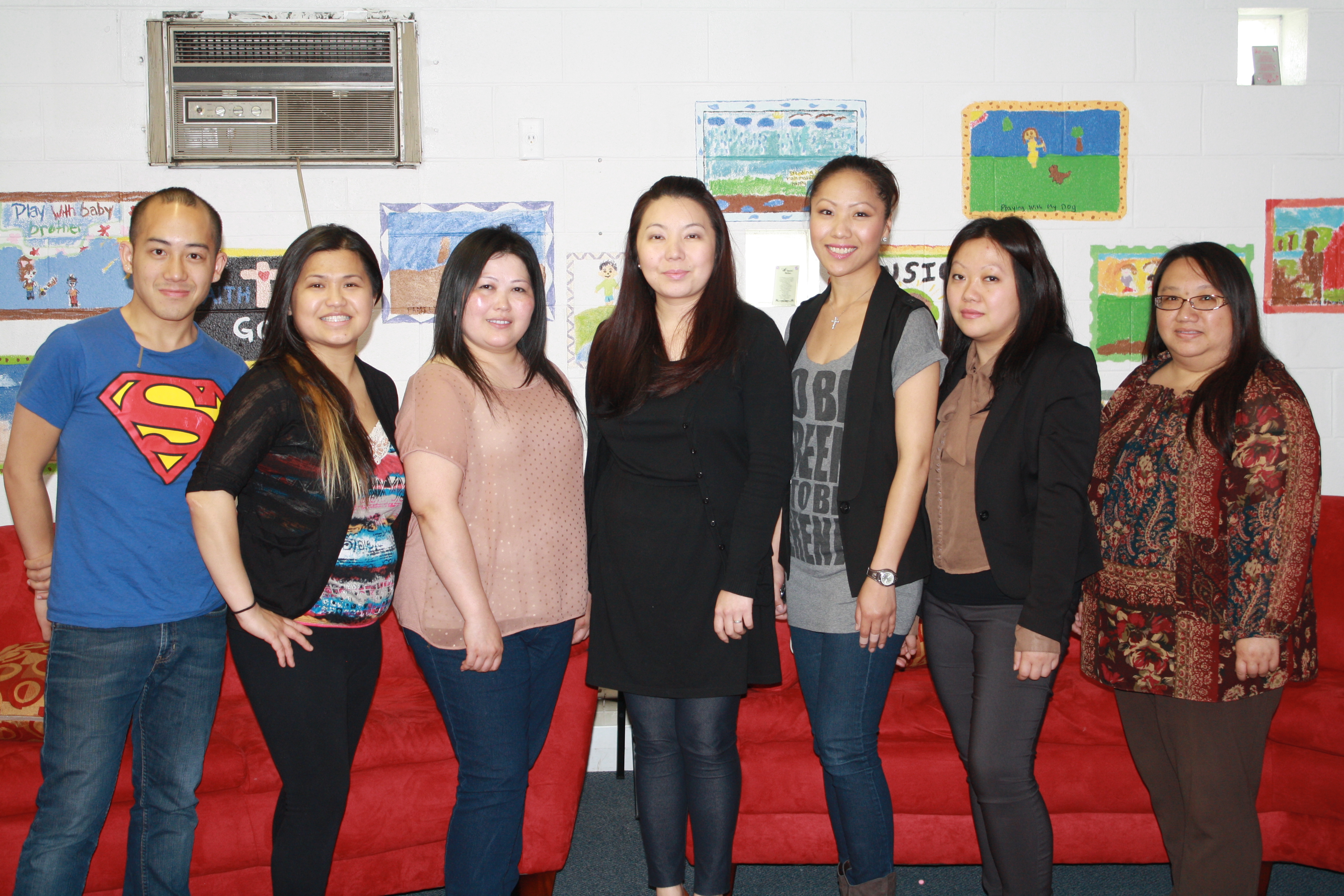
Earlier this week, Linda and I traveled to Milwaukee, WI to present MidWest Solidarity Movement’s Intersectional Justice Advocacy and Ally 101 training with the Hmong American Women Association’s staffs. The workshops entitled critical comprehension of sex, sexuality, gender, and the role of alliance through a critical Hmong cultural lens. Afterwards, we were able to lead a discussion with Hmong women victims and survivors in regards to LGBTQ identities in the Hmong community.

Image